
From Cigarettes to Cookies: What the Tobacco Playbook Reveals About Ultra-Processed Food.
This week, we attended the Ultra-Processed Food Policy Forum where the parallels of ultra-processed foods with the tobacco industry were highlighted, as well as restoring cooking skills as part of the solution.
Ultra-processed foods are increasingly linked to rising rates of diet-related disease worldwide. The issue is caused not simply by what we eat, but rather how modern food products are engineered...
This week at the Ultra-Processed Food Policy Forum at Imperial College London, a presentation by Professor Ashley Gearhardt (University of Michigan) highlighted a striking and uncomfortable parallel between two industries: tobacco and ultra-processed food (UPF).
For decades, tobacco companies defended their products with a simple argument:
“It’s just a plant.”
Today, the ultra-processed food industry often makes a similar claim:
“It’s just food.”
But as Gearhardt argued, addiction and overconsumption are not primarily about where something comes from.
They are about how a product is engineered.
Understanding this distinction may be one of the most important steps in addressing the growing global health burden associated with ultra-processed foods.
Why Do Some Foods Trigger Loss Of Control?
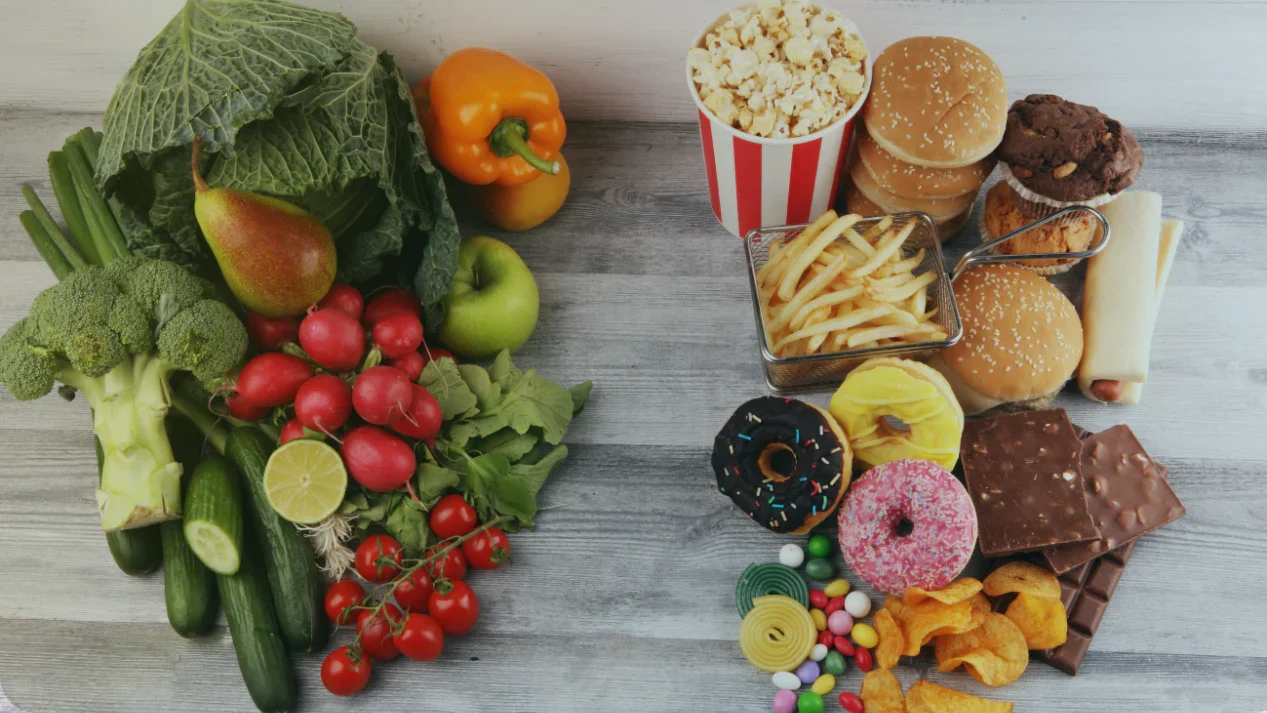
Research consistently shows that people rarely report losing control over whole or minimally processed foods such as apples, bananas, carrots or plain rice.
Instead, the foods most commonly associated with compulsive eating tend to be products such as:
- Chocolate
- Ice cream
- French fries
- Pizza
- Cookies
- Crisps
These foods share key characteristics. They are typically ultra-processed products engineered to maximise palatability, reward and repeat consumption.
Studies examining which foods people report struggling to control have repeatedly found that the same group of ultra-processed foods appear at the top of the list.
This pattern is not random.
It reflects the way many modern food products are designed.
As one of the panelists Baroness Walmsley, member of The House of Lords said:
“Has anyone ever managed to eat just one Pringle?”
The Four Levers of Addictive Products
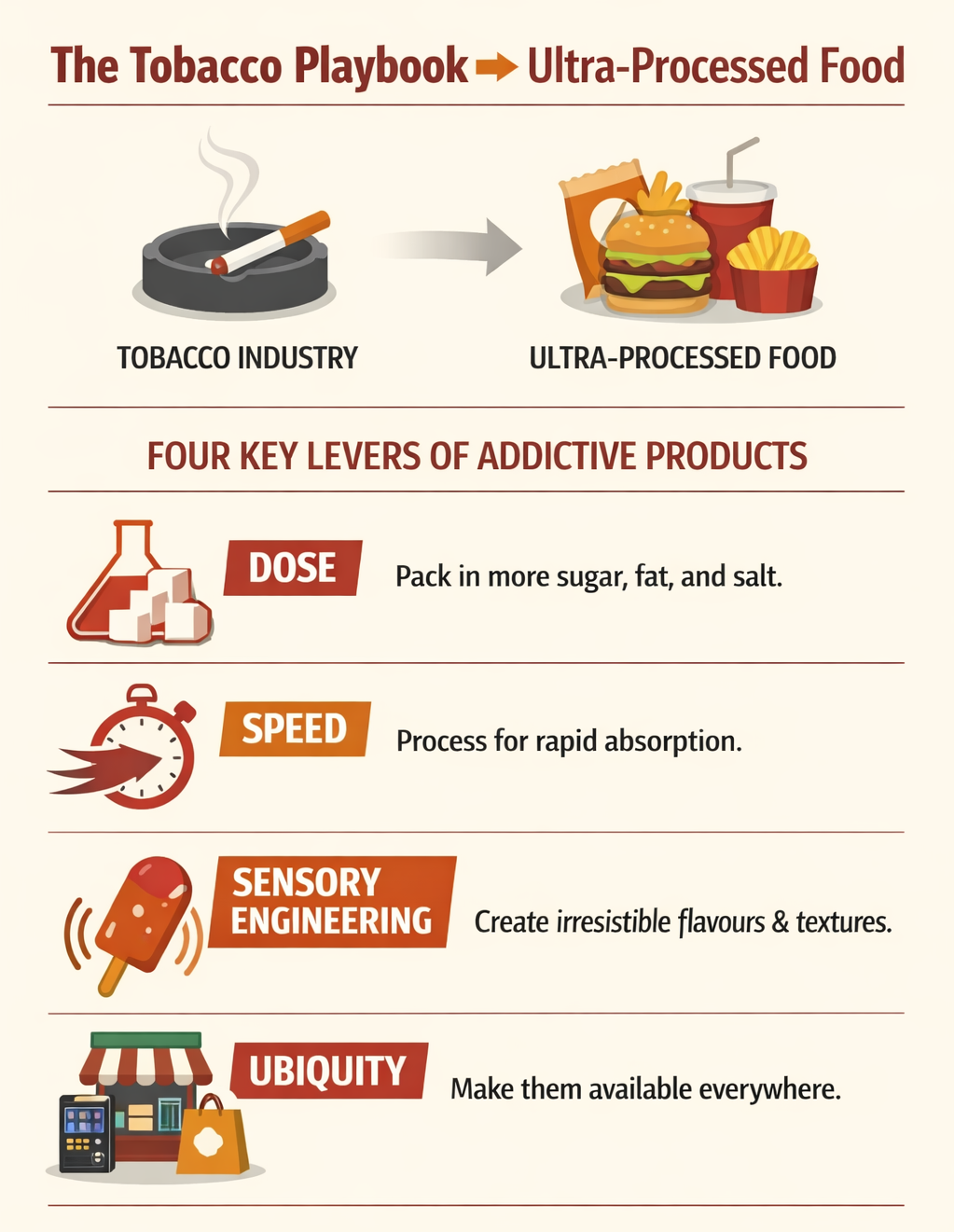
Gearhardt explained that across addictive industries, including tobacco, alcohol and ultra-processed foods, four design principles repeatedly emerge.
1. Dose
Increasing the concentration of reinforcing ingredients such as sugar, refined carbohydrates, fat and salt.
2. Speed
Processing foods so that they are absorbed quickly in the body, delivering rapid reward signals in the brain.
3. Sensory engineering
Carefully designing flavour combinations, textures and aromas to maximise palatability and craving.
4. Ubiquity
Ensuring the product is available everywhere, at all times.
Together, these factors increase stimulation of the brain’s mesolimbic dopamine system. This is the reward pathway associated with motivation, reinforcement and addiction.
Nicotine and alcohol can increase dopamine activity by 150–250%. Highly engineered food products can activate the same neurological pathways.
This does not mean food is identical to drugs. But it does highlight how product design can strongly influence consumption patterns.
The Tobacco–Food Connection
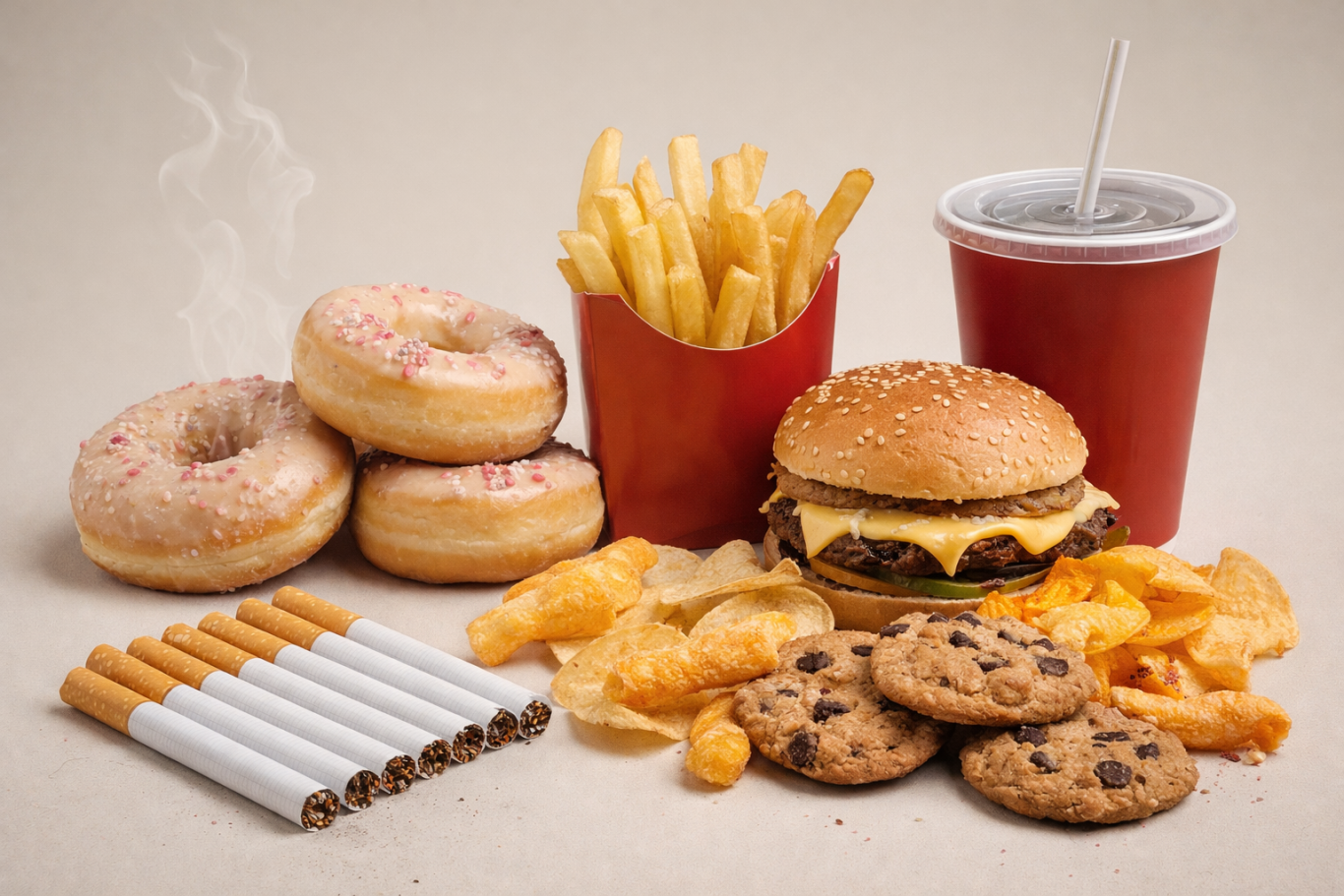
The parallels between tobacco and ultra-processed food are not purely conceptual. There are also important historical links between the industries.
During the late twentieth century, several major tobacco companies expanded into the food sector.
For example:
- Philip Morris acquired Kraft and General Foods
- R.J. Reynolds acquired Nabisco
These companies brought with them decades of experience in product optimisation, flavour chemistry and consumer behaviour.
Research has suggested that some of this expertise was applied directly to the development and marketing of highly processed food products.
In other words, the same corporations that once refined the science of cigarette addiction later played a role in shaping parts of the modern food system.
“People Don’t Lose Control Over Apples”
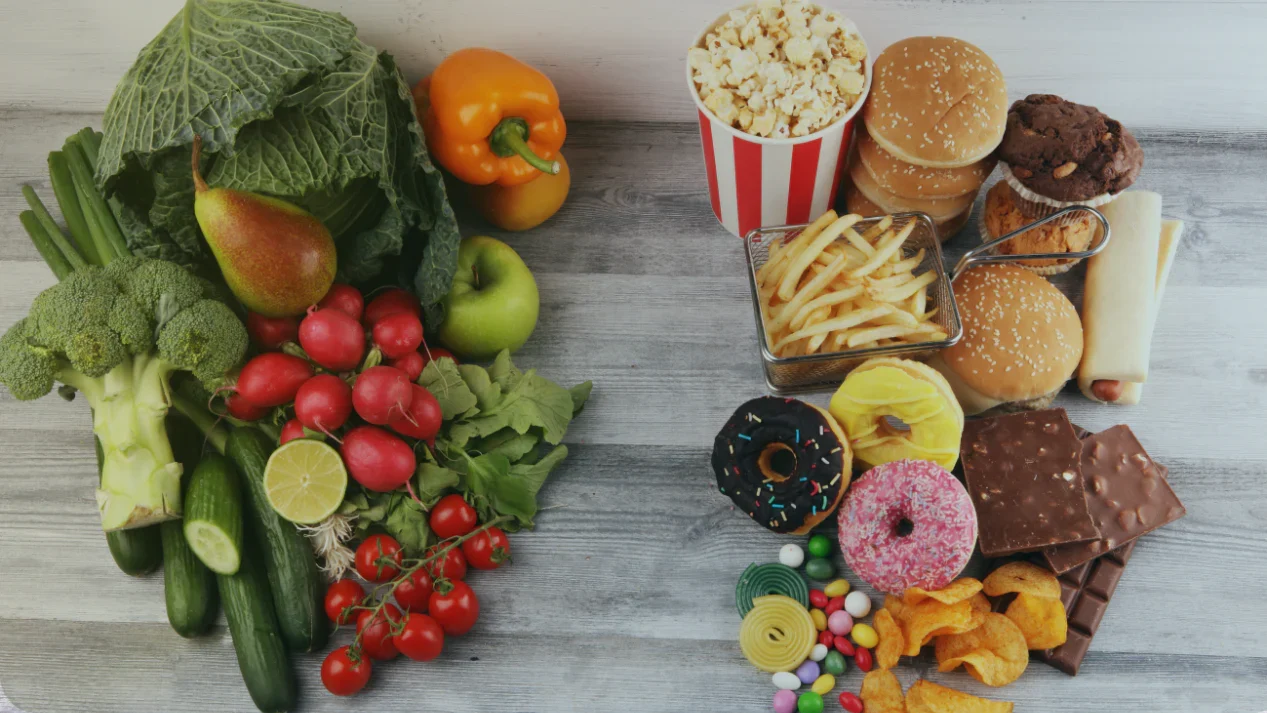
Industrial processing often disrupts the natural food matrix, allowing sugars and refined starches to be absorbed much more rapidly.
One of the most powerful insights from this research is also one of the simplest:
People don’t lose control over apples.
Ultra-processed foods are not simply convenient versions of traditional foods. Their structure is fundamentally different.
Industrial processing often breaks down the natural food matrix, the structural complexity that slows digestion in whole foods. Once that matrix is disrupted, sugars and refined starches can be absorbed far more quickly.
The faster a substance reaches the brain’s reward system, the greater its potential to reinforce repeated consumption.
This helps explain why many people report feeling a loss of control around certain foods, even when they are aware of the health consequences.
A System Problem, Not an Individual Failure
Recognising the role of product engineering changes how we think about diet-related disease.
For many years, public health messaging has focused primarily on individual responsibility.
But if large parts of the food environment are designed to maximise consumption, then willpower alone is unlikely to be enough.
The issue becomes not simply one of personal choice, but of systems, environments and product design.
This perspective is increasingly reflected in global public health research.
The Case for Reducing UPSs
Professor Carlos Monteiro, who developed the NOVA classification that defines ultra-processed foods, has been central to building the scientific case linking UPFs to poor health outcomes.
The recent Lancet Commission series on ultra-processed foods argues that reducing consumption of these products will require coordinated action across multiple sectors, including:
- food policy and regulation
- marketing restrictions
- reformulation of products
- improvements to food environments
The goal is not to eliminate all food processing as this plays an important role in modern food systems, but to reduce the dominance of ultra-processed products in everyday diets.
Bringing Cooking Back
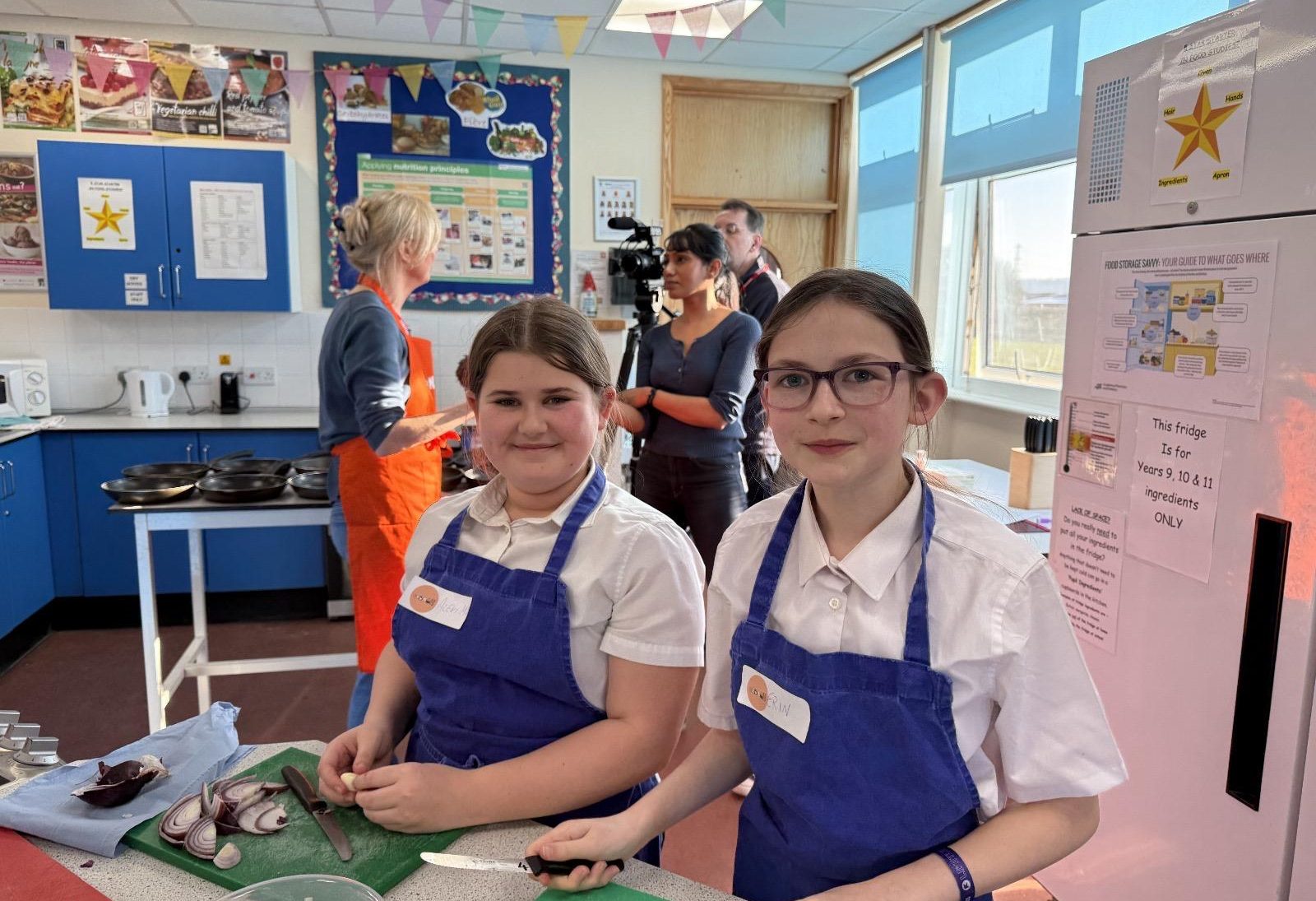
Teaching children to cook can help rebuild food skills, reconnect young people with real ingredients and reduce reliance on ultra-processed food.
At the forum, both Sheila Dillon of the BBC’s Food Programme and Henry Dimbleby, author of the UK’s National Food Strategy and founder of one of the charities we collaborate with, Chefs In Schools, emphasised another crucial part of the solution: rebuilding a culture of cooking.
For most of human history, cooking was a fundamental life skill passed down through families and communities.
Today, many children on our Cook5 with CRuNCH programme have never cracked an egg before. They've grown up without learning how to prepare even simple meals from basic ingredients. Some experts argue there are now two generations who have grown up without learning basic cooking skills.
Reintroducing cooking into education and public policy could play a powerful role in reshaping food habits.
Teaching children to cook:
- builds confidence and food literacy
- reconnects people with real ingredients
- reduces reliance on ultra-processed products
- strengthens food culture and shared meals
In short, it restores something industrial food systems have gradually displaced.
Rebalancing the Food System

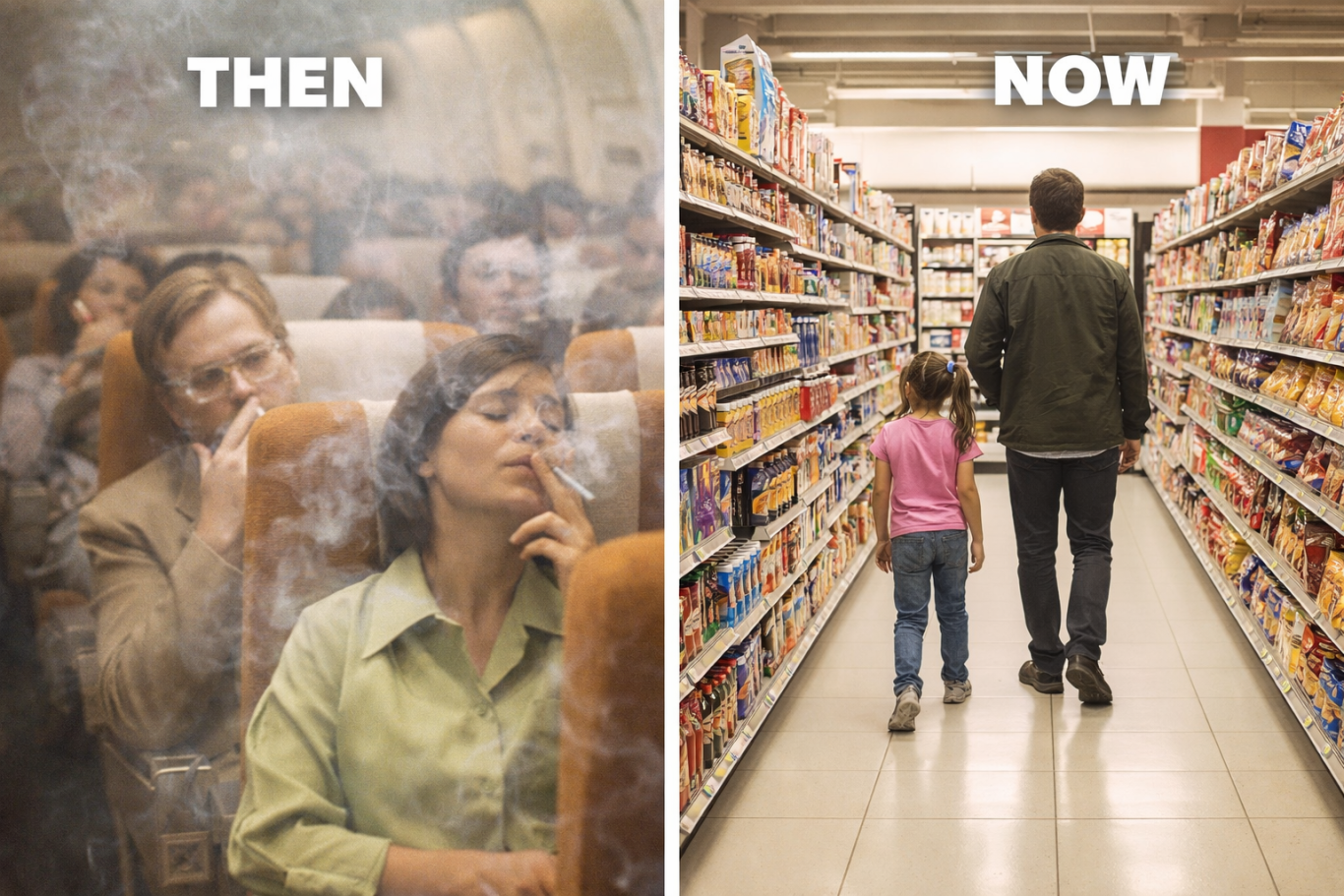
Does anyone remember smoking being the norm in public spaces, like on the aeroplane?
Those who've never experienced it look at me aghast when I describe the fumes and smokey fog pervading pubs and planes! So much has changed since then...in a good way. Today, the health risks of smoking are widely recognised, illustrating how public awareness and policy can transform social norms.
It worked with tobacco, so can we make it work with food?
Of course we can! But it requires policy action, cultural change and public awareness working together.
That means combining:
- global policy efforts to reduce UPF consumption, and
- local and cultural initiatives that rebuild cooking skills and food knowledge.
At CRuNCH, we believe that rebuilding a healthier food system must include bringing cooking back into everyday life.
Cooking is more than a domestic skill. It is a form of food literacy, a way for people, and let's start with children, to understand ingredients, nutrition, cultures, budgeting and sustainability.
Teaching children how to cook can help:
- rebuild confidence with real food
- reduce reliance on ultra-processed products
- strengthen long-term health habits
As we've seen at CRuNCH, the advantages go way beyond the kitchen, into increased self-confidence, school attendance and general wellbeing.
As the conversation around ultra-processed foods continues to evolve, the challenge is not simply to reduce harmful products. It is to rebuild a healthier food culture.
That means addressing the way foods are engineered and at the same time restoring the knowledge and skills that allow people to cook, share and enjoy real food.
Because healthier food systems are not only built in factories or legislatures, they are built in kitchens, classrooms and communities.
And that is where lasting change begins.
Three Key Takeaways from the Ultra-Processed Food Policy Forum
1. Ultra-processed foods are engineered, not accidental.
Research presented by Professor Ashley Gearhardt highlights how many ultra-processed foods are designed using strategies that maximise reward and repeat consumption — including high doses of sugar, fat and salt, rapid absorption, carefully engineered textures and flavours, and widespread availability. These design features influence the brain’s reward system in ways that encourage overconsumption.
2. This is a systems issue, not simply an individual one.
Understanding how products are engineered shifts the conversation away from blaming individuals and toward examining the food environment itself. As research by Carlos Monteiro and colleagues has shown, the rapid rise of ultra-processed foods globally has been accompanied by increases in diet-related diseases. The Lancet Commission series on ultra-processed foods argues that reducing UPF consumption will require coordinated action across policy, regulation and food environments.
3. Rebuilding cooking skills must be part of the solution.
Alongside policy change, speakers including Sheila Dillon and Henry Dimbleby highlighted the importance of restoring cooking as a basic life skill. Teaching children to cook helps reconnect people with real food, builds confidence in the kitchen and reduces reliance on ultra-processed products. Reintroducing cookery education into schools could play a powerful role in improving long-term public health.
Taken together, these insights point to a shared challenge: creating food systems that make healthier choices easier, more accessible and more culturally embedded.
Investing in the next generation
At CRuNCH, we believe that tackling ultra-processed foods will require both structural change in food policy and renewed investment in cooking skills and food education.
We did it for tobacco, now's the time to build the momentum for a better food environment.
References:
Gearhardt A.; Monteiro C.; The Lancet Commission on Ultra-Processed Foods (2024); Schulte, Avena & Gearhardt (2015).
Dimbleby, H. (2021). National Food Strategy: The Plan. National Food Strategy Independent Review.
Gearhardt, A. N. (various publications on food addiction and ultra-processed foods).
Monteiro, C. A. et al. (2019–2024). Research on ultra-processed foods and the NOVA classification. Schulte, E. M., Avena, N. M., & Gearhardt, A. N. (2015). Which foods may be addictive?